



Does Switzerland produce malt for its beers?
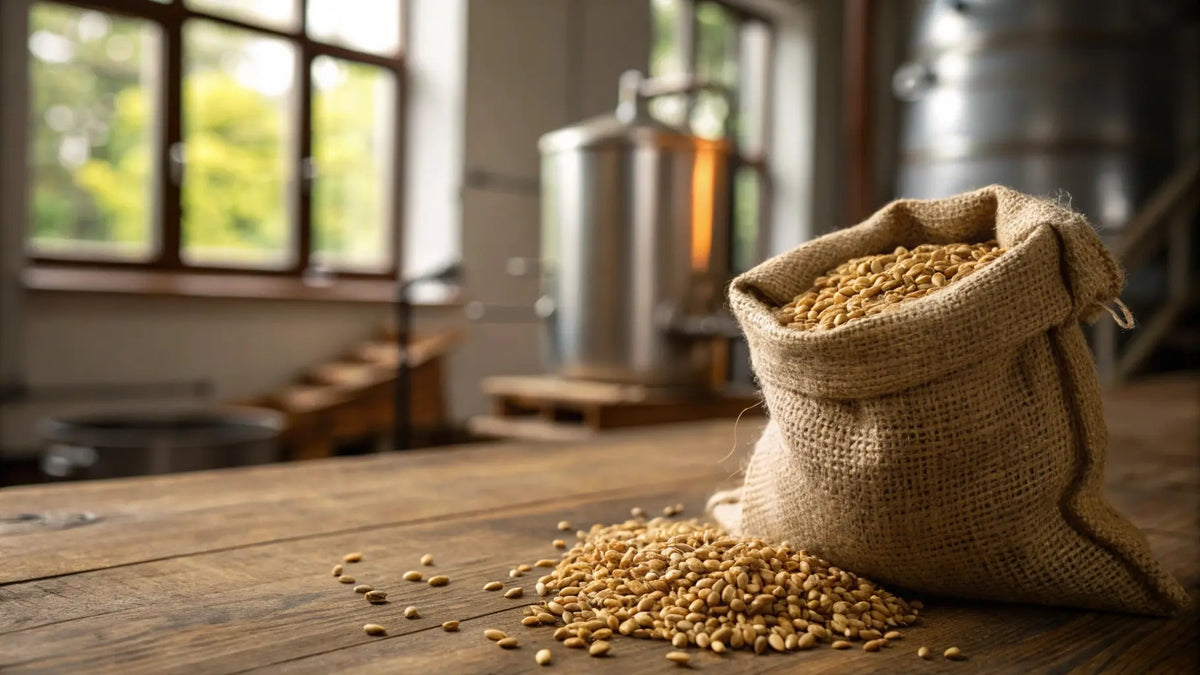
The Swiss craft beer you're sipping is probably made with German, French, or Belgian malt. Not great for a product marketed as "local." Especially when you see all those barley fields surrounding us in Switzerland.
But there's a world of difference between growing barley and turning it into malt for brewing. For decades, Switzerland completely skipped this step. Too much hassle, not profitable enough. As a result, they politely left the market to their neighbors.
Today, Swiss malt is being produced again. But before we pop the champagne, let's do a quick reality check: 2% of total production. Yep, two percent. The rest arrives by truck from abroad, and frankly, that's not going to change anytime soon.
Why are we so bad at this? Does Swiss malt really make a difference in your glass? And above all, how did we end up importing everything for years before this tentative comeback?
Only 2% of the malt used in Switzerland is produced locally
Switzerland consumes approximately 70,000 tons of malt per year. Of this total, barely 1,500 to 2,000 tons are produced locally. That's less than 3% of the total. Impressive, isn't it?
For decades, no malt was produced. The last malt houses closed their doors in the 1970s and 1980s, unable to compete with the European giants who were crushing prices.
The return began gradually in 2015 with artisanal initiatives, followed by an industrial malt house in Möriken-Wildegg, Aargau, in late 2021. This facility produces approximately 1,500 tons per year. But let's be realistic, it remains largely symbolic.

Two artisanal malt houses operating in French-speaking Switzerland
In French-speaking Switzerland, two artisanal malt houses share the market. The Satigny malt house near Geneva, opened in 2015, processes approximately 80 to 100 tons of barley per year. Not enough to feed all of Switzerland, but sufficient to supply about fifteen Geneva breweries. The Bavois malt house in the canton of Vaud operates in the same sector, using artisanal methods and an ultra-short supply chain.
These small breweries work with local farmers and prioritize quality over quantity. But they obviously can't meet the demand of large breweries or offer the full range of specialty malts. For everything else, they import from Germany, France, and Belgium, where industrial malt houses produce tens of thousands of tons annually.
The vast majority of the malt comes from Germany, France and Belgium.
Even Swiss barley, when it was grown before the 2010s, was sent to Germany to be malted before being returned. Absurd? Yes. But economically logical. Foreign malt houses have the volumes, the expertise, and the prices that crush everything else.
Even today, it's difficult to do otherwise. For base malts, local options are starting to emerge. But for smoked, roasted, or chocolate malts? It's off to foreign suppliers; there's no other choice.
Why is there so little local malt production?
Producing malt in Switzerland isn't just a matter of will. It's a real economic and agricultural puzzle.
Malting barley has long been absent from Swiss fields.
Historically, Swiss barley was used to feed livestock, period. Malting barley? No one knew about it. Or rather, nobody wanted to grow it because nobody wanted it. No Swiss malt houses, no customers, no market. A vicious cycle.
Things changed in the 2010s with the explosion of microbreweries . We went from 30 hectares of malting barley in 2020 to around 400 hectares in 2023. Clearly an improvement. But we're still dwarfed by the cultivated areas of our neighbors. And the problem remains: farmers have to plan 18 months in advance with no guarantee that brewers will follow suit.
Malt houses need large volumes to be profitable.

Running a malt house costs a fortune. Germination tanks, kilning, quality control, energy... all of this requires heavy investments that only pay for themselves with volume.
The Möriken-Wildegg malt house produces 1,500 tons per year. Not bad, except that it's 50 times less than the average malt house in Germany. The direct result: Swiss malt costs 3 to 4 times more than imported malt.
For large breweries producing thousands of hectoliters, this price difference is simply insurmountable. For small craft breweries, it's manageable if they can highlight their local origins. But it remains a luxury.
Does Swiss malt really taste different?
Because in the end, that's what matters in your glass, right? Can you taste a difference? Yes, but you really have to look for it.
Local varieties of malt bring subtle nuances.
Each region has its own specific characteristics. The barley that grows in Geneva doesn't live the same life as the barley grown in Bavaria. Different climate, different soil, different varieties. These differences are reflected in the malt and therefore in the beer.

Swiss malt houses don't mass-produce like the industrial giants. Satigny and Bavois meticulously sort each batch and tailor the kilning process to the specific barley. As a result, each batch has its own subtle signature. We're talking about slight nuances, profiles that are a touch softer or more cereal-like. Brewers can tell immediately, but the average consumer is much less aware of it.
At La Nébuleuse, we prioritize the quality and freshness of the malt above all else, whether it comes from here or elsewhere. If a Swiss malt meets our criteria, great. Otherwise, we're not going to compromise just for a pretty "local" sticker on the bottle.
The freshness of the malt influences the aromas of craft beer
That, on the other hand, is a concrete fact. Malt is like bread: the fresher it is, the better. Malt from Germany has traveled a long way, it's been sitting in warehouses, it's taken its time. Malt from Satigny or Bavois? It comes straight from the malt house and arrives here almost immediately. The difference in delivery time can range from a few weeks to several months.
Brewers who use local malt are clear on this point: the malt is more expressive, with pronounced notes of fresh grain. The freshness also improves sugar extraction during brewing and reduces the risk of defects. Added convenience for the brewer, and added quality in the glass.
But let's be clear, freshness doesn't work miracles. An average malt remains average, even if it's fresh from the malt house. Local sourcing is an advantage, not a guarantee of quality. That's why we test, taste, and approve each batch before brewing with it.
Swiss malt exists, it's slowly making a comeback, and that's great for the local craft beer scene. But we're still far from a self-sustaining industry. And frankly, that's not a big deal. The important thing is to keep brewing amazing beers with quality ingredients , whether they're made with local malt or malt from elsewhere.
Cheers 🍻


