



What is a craft beer session?
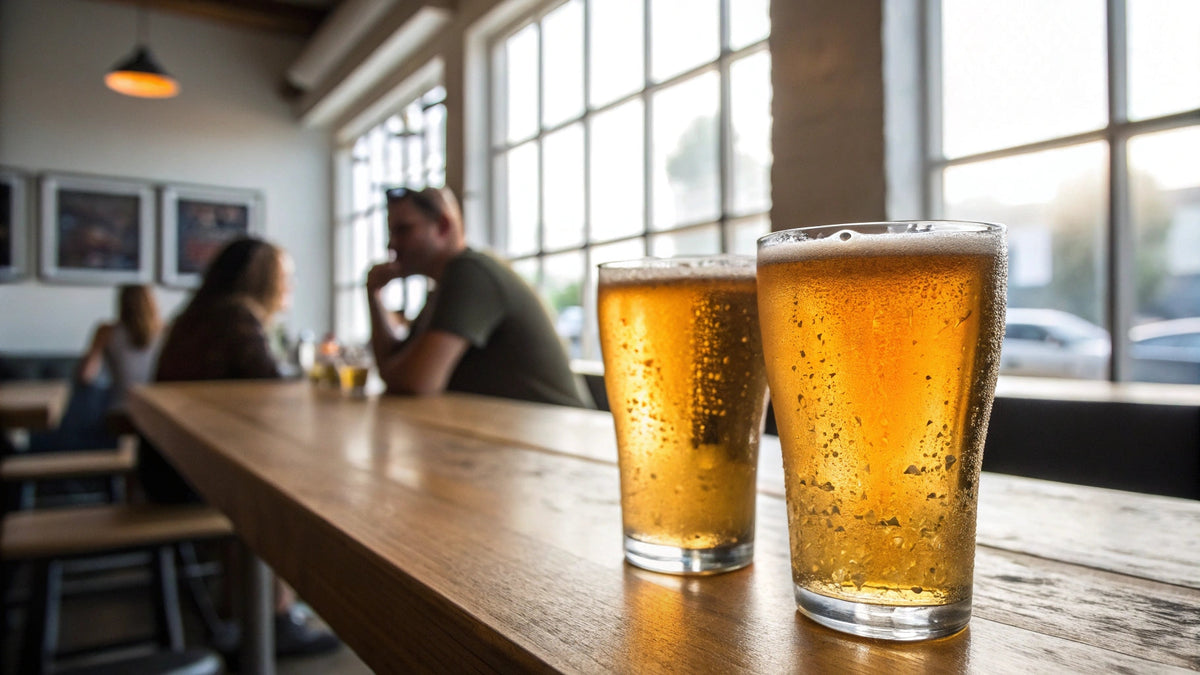
Session IPA. Session Pale Ale. Session Lager. The word "session" is proudly displayed on craft labels, but let's face it: most people have no idea what it really means.
A session beer is a craft beer with an alcohol content below 5% . Period.
The goal? To have several drinks without turning a pleasant after-work gathering into a disastrous evening. To enjoy a sunny terrace without nodding off into your burger after the second pint.
The story goes that the concept originated in England during the First World War. Munitions factory workers had limited breaks—"sessions"—to down a few beers before returning to assemble shells. They logically preferred lighter beverages. Because making explosives while staggering isn't exactly a great idea.
Today, sessions embody a less aggressive approach to craft beer. Less alcohol doesn't mean less flavor. That's precisely the challenge.
A beer designed to be drunk in multiple bottles
The definition of a session beer can be summed up in one sentence: a craft beer whose alcohol content generally remains between 3% and 5% . Some purists set the limit at 4%, others accept up to 5%. The debate rages in brewing circles, but frankly, we don't really care.
What matters is the principle: drinkability . A session is a beer you can keep coming back without feeling the alcohol kick in too quickly. Not to drink without limits, but to enjoy a moment that lasts without losing track of the conversation or the ability to get home on your feet.

The body is light, the carbonation moderate. Nothing cloying. The finish is clean, without heaviness. Balance is key: not too bitter, not too sweet, not too malty. Just enough of everything so that each sip makes you want the next.
A beer that's light in alcohol, but not in taste.
That's the real challenge of these sessions: making a 4% beer that doesn't taste like water . Because less malt mathematically means fewer fermentable sugars, therefore less alcohol. But it also means less body, less substance, less structure.
The risk? A watery, bland beer with no personality. The kind of thing that makes you regret ever giving up mass-produced beers.
How brewers preserve aromas
To avoid this pitfall, craft brewers primarily rely on dry hopping to impart intense aromas without adding alcohol. The result: a beer that explodes in the mouth despite its low alcohol content (what's called ABV, for Alcohol By Volume).

Take our Speakeasy, for example. At 4% ABV, it could have been a bland, uninteresting beer. Instead, we went all out with the hops, using Herkules, Cascade, Hallertauer Blanc, and Mandarina Bavaria. The result? Bold aromas of lime, white grape, and mandarin . Light in alcohol, but not in character.
The most popular session style? The Session IPA , without a doubt. Because IPA has been the darling of the craft beer movement for years. We keep the burst of hops, the tropical or resinous notes, but we lower the alcohol content so we can drink more without ending up on the floor.
Session Pale Ales follow the same principle, with a generally milder profile. Light craft lagers reinvent European classics with an artisanal approach. And then there are the ultra-light beers, between 2% and 3% ABV , which push the boundaries of the genre. Our 2.5% ABV Alternative is a good example: only 50 calories per 33cl, but with a noticeable aromatic profile.
The perfect opportunities to enjoy a beer session
The sessions shine in situations where time stretches out:
- The after-work drinks that drag on. With a classic 6.5% IPA, after three glasses you're either completely wasted or you seriously slow down. With a 4% session beer, you can keep up the pace without turning the evening into a rough morning after.
- The sunny terrace. When it's hot, we get thirsty. We want to drink, not count our glasses like an anxious accountant. A session quenches our thirst without knocking us out. We can spend the afternoon outside without feeling the alcohol weigh us down.
- The festival that lasts for hours. We want to enjoy ourselves, drink, but not end up crawling towards the exit at 10pm because we downed three Double IPAs in the early evening.

Ultimately, these sessions embody a form of responsible consumption . Mind you, this isn't an excuse to drink without restraint – alcohol is still alcohol, even at 4%. But it does allow you to better manage your intake while still enjoying the moment. Less alcohol per drink helps you stay in control of your evening.
A smart alternative to strong beers
The craft beer movement has long relied on one-upmanship. Stronger, more bitter, hoppier, more intense. Imperial IPAs at 9%, Barrel-Aged Stouts at 12%, Triple IPAs that assault both the palate and the liver simultaneously. Impressive, but not exactly what you're looking for on a relaxed evening.

Craft brewing sessions are a game changer. You can have a beer that's low in alcohol AND flavorful . That's the whole point. Craft breweries have proven that it's possible to go below 5% ABV without producing plonk.
The difference between a Session beer and a non-alcoholic beer
Note that a session beer is not a non-alcoholic beer. NA (non-alcoholic) beers have an alcohol content of less than 0.5% . This is a different category, with its own technical challenges and target audience. A session beer still contains alcohol, just less than a standard craft beer.
The difference is significant. At 4%, you can still feel a slight effect of alcohol after a few drinks. At 0.5%, nothing. The occasions for consumption are not the same. NA beers are aimed at those who absolutely don't want alcohol—drivers, pregnant women, those who have stopped drinking. Session beers are aimed at those who want to drink moderately without sacrificing flavor.
We've always aimed to brew balanced beers, not caricatures. Sessions like Speakeasy and Alternative extend this approach. There's no need to use a multitude of exotic ingredients or push recipes to extremes to make a good beer. Consistency and balance are just as important as experimentation .
Session beers bridge two worlds. On one hand, there are the powerful craft beers that can sometimes intimidate newcomers. On the other, there are the light but bland industrial beers. Session beers offer an accessible entry into the craft beer universe , with character but without the harshness. For those who find Double IPAs too aggressive or who are coming from industrial beers, it's often the ideal gateway. Once you've tasted a well-balanced session beer, it's hard to go back.
Cheers 🍻


