



Which light craft beers should I choose for an aperitif?
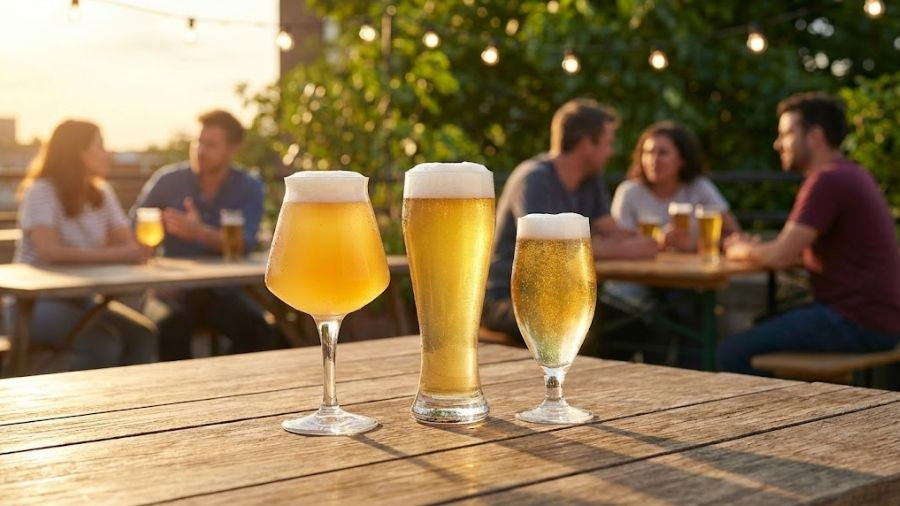
Drinks on the terrace are sacred. But after two pints of 7% IPA, good luck holding a coherent conversation. And the meal that follows? Forget it.
However, "light beer" shouldn't rhyme with "bland beer." A mass-produced lager at 4.8% ABV is more likely to lull us to sleep than quench our thirst. Conversely, a Session IPA at 3.5% ABV can burst with tropical aromas. The Alternative we brew in Renens has an ABV of 2.5% and possesses more character than 99% of commercially available blondes.
The myth to debunk immediately? Less alcohol equals less flavor. False, as confirmed by professional tasting techniques . With the right brewing techniques (dry hopping, bottom fermentation, careful malt selection), maximum aroma is extracted without increasing the alcohol content. It's even harder to achieve than with a strong beer where the alcohol masks the flaws.
Light craft beer is a technical feat that no one notices. Because it's too easy to drink.
Session styles and Craft Lagers offer maximum drinkability
In our brewing tanks in Renens, we're not just looking for show. We're aiming for drinkability. It's that precise balance that makes you want to take another sip because the beer is fresh, clean, and your palate isn't overwhelmed after three minutes.
Light craft beers achieve this feat by playing on two levels. First, a slender body that glides smoothly on the palate without being heavy. Second, a bold aromatic expression that avoids monotony. No compromise between character and lightness. Both or neither.
Session IPA allows you to retain the intensity of the hops without the alcohol.

The term "Session" comes from English and refers to a long evening of pints without ending up under the table. Unbeatable British logic. Technically, a Session Beer generally has an alcohol content of less than 4.5% according to international standards.
The Session IPA takes the concept even further. It retains the aromatic punch of a classic IPA but with half the alcohol. How? Thanks to dry hopping, this technique of adding dry hops that changes everything.
Hops are added after fermentation, at room temperature. As a result, the essential oils in the hops release their aromas (mango, passion fruit, grapefruit) without adding any bitterness. No boiling, no loss of volatile aromas, maximum character. And above all, zero added alcohol.
For those who love explosive IPAs but want to keep the party going all after work, this is the perfect option. All the hoppy intensity, none of the heaviness.
A well-crafted craft lager emphasizes the freshness of bottom fermentation.
Craft lagers deserve better than their reputation as "uninteresting thirst quenchers." A true craft lager requires more technical skill than an ale.
Bottom fermentation takes place between 8°C and 15°C, compared to 18°C to 24°C for top fermentation. At this temperature, the yeasts work slowly and produce few aromatic byproducts. The resulting profile is surgically precise. We're talking about "clean" flavors, without any embellishment.
Our Zepp perfectly illustrates this style. Noble hops like Saazer bring subtle floral and herbaceous nuances. Nothing bombastic, just refined. The dry finish instantly cleanses the palate. Perfect with pretzels or light cheeses, this natural effervescence creates perfect food and beer pairings .
Industrial lagers killed this style by diluting it to death. Craft versions revive it with character.

Ultra-light or gluten-free creations promote digestibility
The aperitif is a key moment that often precedes a meal. It's best to avoid arriving at the table with a full stomach. Ultra-light beers and gluten-free versions perfectly meet this need.
Technological innovation now makes it possible to modify the structure of grains or drastically reduce residual sugars. We're no longer talking about a "boring diet product" but true brewing prowess.
The 2.5% Alternative represents the new frontier of moderation
Brewing a beer with 2.5% alcohol that packs a punch is our local pride. Our Alternative is only 50 kcal per 33cl , but the technical challenge far surpasses that of a Double IPA.

With such a low initial density, it's impossible to mask any flaws. Every ingredient must be selected with meticulous precision. The specific malts impart notes of fresh grain despite the low sugar content. No dilution, just a perfectly balanced, precise approach.
Perfect for a leisurely aperitif, a lunch break on the patio, or simply for those who want to control their consumption without resorting to fizzy water. Intelligent moderation isn't about abstaining. It's about making better choices.
Gluten-free beers are natural allies for your digestive comfort
Since November 2023, our Stirling has gone gluten-free . Not because it's trendy, but because technology now allows it without sacrificing taste.

The process relies on enzymes added during fermentation. These enzymes break down the gluten protein chains into fragments so small that the body no longer recognizes them. Each batch is tested to guarantee a level below 5 ppm (parts per million), well below the legal limit of 20 ppm.
The result is a Pale Ale with a more refined mouthfeel. No heaviness, none of that "overly full" feeling that kills the appetite. Despite this finesse, it remains an aromatic powerhouse with its 5.3% ABV and vibrant notes of grapefruit and lychee from the Cascade and Simcoe hops. Zero compromises.
For those with celiac disease or gluten intolerance, it's obviously an essential option. But even without intolerance, many find it easier to digest. Stirling remains our first beer, the one that launched La Nébuleuse in 2014. The fact that it's now gluten-free proves that innovation and tradition can coexist in the same can.
Light craft beer is anything but a compromise. It's a category in its own right, requiring just as much skill as a 12% Imperial Stout. The difference? It's not visible. It's drinkable.
Cheers 🍻


